

It’s media training.
You learn pretty quickly that many interviews aren't really conversations. They're performances. You're taught how to answer difficult questions, how to redirect conversations, and how to stay on message.
You also learn something else.
If a reporter wants a certain answer, they’ll keep asking the same question until they get the answer they want, or you stop answer questions.
Many athletes learn to let someone else shape the narrative.
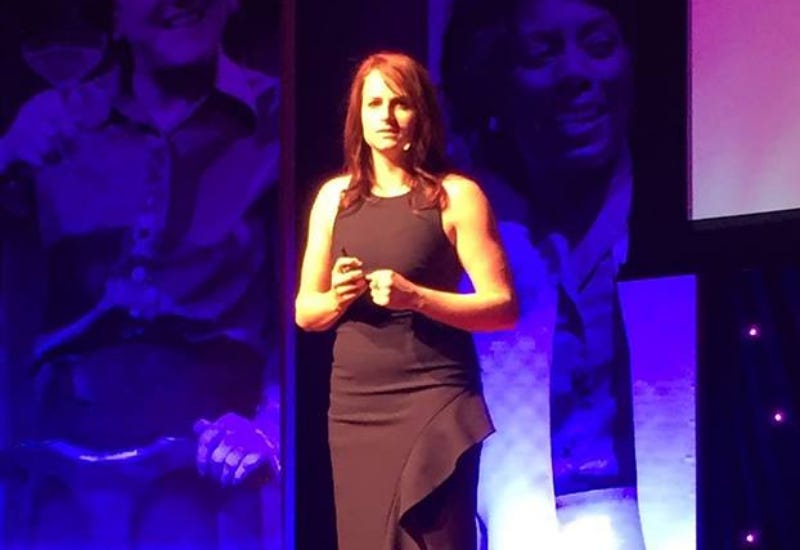
I was no exception.
There’s an interesting concept in psychology: every time we remember something, we aren’t replaying the memory we’re reconstructing it. Each re-telling can gradually change how we remember it.
Over time, the version we tell most often can become the version we remember.
For me, that version started in 2002.
As a teenager, I watched Kelly Clark win Olympic gold in Salt Lake City. It's true that she inspired me to try snowboarding. It’s not true that I watched her and thought “I want to go to the Paralympics one day.”
Despite having been an amputee for nearly a decade, I didn’t really know that much about the Paralympics, but at some point, the story became: “I watched Kelly Clark and from that moment on I dreamed of going to the Paralympics.”
The problem with the truth is that it’s often less polished. Less glamorous. It doesn’t have a perfect beginning. It might not even have a defining moment where everything makes sense.
Real stories wonder, they change, they even contradict themselves.
I started snowboarding because I wanted to prove that amputees can snowboard. And not just amputees, but above-knee amputees. That’s an important distinction, and one that’s easier to understand if you’ve watched this ancient artifact:
Back then, the Paralympics weren't the dream, they simply became the path.
High-performance sports provide structure around coaching, funding, travel, and a community. In the disabled/adaptive sports world, that structure rarely exists outside the Paralympic bubble.
The games became the goal because they opened doors.
I never intended to rewrite the origin. We replaced the curiosity with certainty. The confusion and chaos with intention. Maybe that’s why we’re so drawn to stories where the plots predictable. There’s peace in predictable.
It’s nice to read about someone who’s “made it to the other side” and can make sense of the struggle. To learn that someone was brave enough to prioritize curiosity over clarity.
Maybe our job isn’t to tell the most inspiring version of our story.
The polished version might make a better interview, but the honest version is the one that helps us better understand ourselves.